How to do a SWOT Analysis: Complete Beginner's Guide


Strategic planning does not have to mean a 40-page document and a two-day offsite. Some of the sharpest business decisions come from a single page with four boxes on it. That is essentially what a SWOT analysis is. Simple on the surface, genuinely useful underneath. If you have heard the term thrown around and wondered what SWOT is beyond the buzzword, this guide walks you through how SWOT works, what belongs in each section, and how to turn the whole thing into something actionable.
What is a SWOT Analysis?
SWOT analysis stands for Strengths, Weaknesses, Opportunities, and Threats. It is a framework that helps you take a structured, honest look at your situation before making an important decision.
So what actually makes how SWOT works so useful? It comes down to one simple split: half of what you analyze is inside your hands, and the other half is not.
- Strengths and Weaknesses fall on the inside. Your people, your processes, your budget, and your product quality-these are yours to own and yours to fix.
- Opportunities and Threats sit on the outside. A rival shutting down, a new city regulation, customers suddenly wanting something different-none of that is in your control, but all of it affects you.
That inside-outside split is what gives the framework its structure. Once you know which side something belongs on, the rest of the analysis clicks into place pretty naturally.
Where Did SWOT Come From?
Understanding what SWOT is today is easier when you know where it started. SWOT traces back to research at the Stanford Research Institute between 1960 and 1970, led by Robert Stewart and a team that included Albert Humphrey. They were trying to figure out why corporate planning kept failing inside large companies.
Their early framework was called SOFT, where "F" stood for "Fault" instead of "Weakness." The name later changed to SWOT, and Heinz Weihrich formalized the 2x2 matrix we still use today. What started as a corporate research tool eventually spread into business, education, nonprofits, and personal goal-setting across the United States.
The Components of a SWOT Analysis
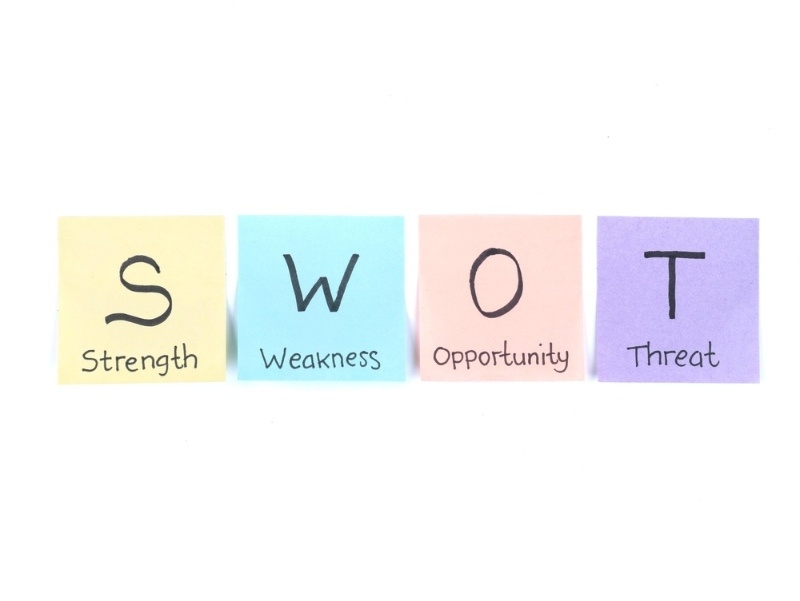
Understanding the components of a SWOT analysis is where things get practical. Here is each one using a single example: a small coffee shop in Denver, Colorado.
- Strengths are your internal advantages. For the coffee shop, that might be a loyal customer base, a skilled staff, and a corner location near a university.
- Weaknesses are internal gaps holding you back. No mobile ordering, a tight marketing budget, or a menu unchanged since 2019. The components of a SWOT analysis only deliver value if you are willing to name these honestly.
- Opportunities are favorable external shifts. The remote work trend is driving more weekday foot traffic. A new apartment building is opening nearby. These are conditions in the market that you can move on from.
- Threats are external pressures outside your control. A national chain is opening two blocks away. Coffee bean costs are rising. You cannot stop these, but you can plan around them.
You may also like: How to Build an Emergency Fund Quickly and Smartly
The Benefits of a SWOT Analysis
The real benefits of a SWOT analysis show up when you take it seriously rather than treating it like a checkbox exercise.
It forces honesty. Listing weaknesses and threats alongside strengths changes the conversation and gives teams a more grounded view of reality. It also helps with timing. The benefits of a SWOT analysis are most obvious at a decision point, whether you are launching something new, entering a market, or responding to a sudden industry shift.
The benefits of a SWOT analysis are not limited to large companies either. Solo business owners, freelancers, students, and nonprofit directors across the US all use it for the same reason. It works at any scale.
How to Run One: 6 Steps
A lot of people understand what a SWOT is in theory but freeze when it comes to actually running one. These six steps make it straightforward at any experience level.
Here is how SWOT works in practice:
- Pick a clear focus: Whole company, one product, or one decision? A narrower scope means sharper insights.
- Gather real data first: Pull customer reviews, sales numbers, and competitor research before you brainstorm. Opinions without evidence produce wishful thinking.
- Work through each quadrant with your team: Four to seven specific points per section is the sweet spot.
- Get outside input: People closer to day-to-day work will catch things leadership misses, especially on weaknesses and threats.
- Rank what matters most: Not every item carries equal weight. Focus on what most affects your outcome.
- Make it actionable: Use strengths to chase opportunities and shore up weaknesses before threats exploit them. Understanding how SWOT works is this cross-referencing step where real strategy comes together.
Common Mistakes When Preparing a SWOT Analysis
Even experienced teams get this wrong. Here are the common mistakes when preparing a SWOT analysis to watch out for:
- Being too vague: "Strong brand" means nothing. "4.7-star average across 900 Google reviews, highest in our zip code" is useful. Every point needs to be specific enough that someone outside your team understands it.
- Mixing up categories: A competitor launching a new product is a threat, not your weakness. Getting this wrong is one of the most common mistakes when preparing a SWOT analysis, and it clouds your strategy.
- Treating it as a one-time task: Markets shift, staff changes, competitors pivot. Revisit yours at least once a year or whenever something significant changes.
- Not following through: This is the biggest of the common mistakes when preparing a SWOT analysis. A well-researched SWOT analysis in a folder is wasted effort. The whole point is turning findings into a plan.
More to Explore: Bootstrapping 101: How to Start a Business With No Money
Wrapping Up
A SWOT analysis will not make your decisions for you, but it gets you closer to making the right ones. It is honest, practical, and built for anyone willing to sit down and think clearly for half an hour.
If you have a decision sitting in front of you right now, open a blank document and try it. You might be surprised at what shows up once you start writing things down.
Frequently Asked Questions
Can SWOT analysis be used for personal career planning?
Absolutely. Treat your skills, habits, and experience as internal factors, while the job market, industry trends, and networking possibilities are your external ones. Many professionals across the US run a personal SWOT before a job change or big career pivot. It brings real clarity in a short amount of time.
Is SWOT analysis the same as a competitive analysis?
Not quite, and the difference is worth knowing. A competitive analysis is really just about your rivals, how they price, what they offer, and where they are winning. A SWOT goes much wider than that. It pulls in your internal reality alongside everything happening outside, things like shifting regulations, economic conditions, and changes in how your customers think and buy. A lot of US businesses actually run both at the same time because they answer different questions. One tells you about your competitors. The other one tells you about everything else.
How is SWOT different from PESTLE analysis?
PESTLE examines only external macro-level forces: political, economic, social, technological, legal, and environmental. SWOT blends both internal and external factors. They work well together. Running a PESTLE first helps surface the opportunities and threats you then bring into your SWOT. Think of PESTLE as the research phase and SWOT as the decision-making phase.
This content was created by AI