How Does a Brand Value Chain Create Growth in Business?


Key Takeaways
- Align what you do in marketing with how your customers behave and what the results have for the enterprise
- Monitor all aspects of your brand value chain with defined performance measures
- Leverage consumer insights and market research data to improve consumer awareness, perceptions of, and loyalty for your brand
- Align financial targets and the use of brand assets-so all monies spent on brand advertising provide a visible effect
- Perform a quarterly Brand Value Chain Analysis. Look for weak spots, improve the customer experience, and keep your business growing.
The brand value chain is one of the clearest ways to see how your marketing actually pays off. Lots of companies spend big on ads, social media, or customer engagement, but they struggle to prove that effort boosts sales or market position. Research shows that strong brands usually win-customers stick around, you can charge more, and the business performs better over time.
Branding isn't just about your logo or a clever campaign; it's about a series of actions that shape how people see you, influence their decisions, and drive real financial results.
Ever wonder why some brands see a bigger payoff on similar budgets? That's what the brand value chain explains. In this article, you'll see what the brand value chain is, how it actually works, and how you can use it to create growth that lasts.
What is a Brand Value Chain?
The brand value chain is a framework for showing how your marketing activities build value for your brand-and how that value eventually shows up in your bottom line. It doesn't say you'll see results overnight. Instead, value flows step by step:
1. Marketing investment
2. Customer perception
3. Market performance
4. Financial performance
This lets you ask important questions: Are our efforts making more people aware of us? Do customers trust us? Is our reputation turning into more sales? And do those gains show up as real financial value? When you track each stage, you spot what's working and what needs fixing.
Understanding the Brand Value Chain Model
Think of the brand value chain as a link between your brand-building and business results.
Marketing Program Investment
This is what you put out there-ads, content, social media, PR, sponsorships, and even how customers experience your service. The goal isn't to spend more; it's to reach the right people with a consistent message and clear goals.
Customer Mindset
Next, people form impressions. They know you exist, they think something specific about your quality, and, hopefully, they trust you. They might even have an emotional tie to your brand. Most people won't buy if they've never heard of you or don't trust you-so building positive perceptions really matters.
Market Performance
You'll start to see results-more sales, better customer retention, improved market share, stronger loyalty, and even the ability to charge more. This is where you learn if your reputation is actually changing buying behavior.
Shareholder and Financial Value
Finally, all of these steps work together to boost numbers that actually matter-revenue, profit, cash flow, and overall company value. Strong brands can charge higher prices and keep customers for longer, which pays off in long-term financial health.
Must Try: What are the Types of Business Structures in 2026?
Brand Value Chain Stages Explained
Here is where each stage builds on the previous and where you should look:
| Stage | Core Activity | Measure / Metric |
| Marketing Investment | Running Campaigns | Campaign Reach |
| Customer Mindset | Developing Knowledge and Trust | Brand Recall and Trustworthiness Scores |
| Market Performance | Understanding and Shaping Consumer Behavior | Repeat Purchases and Market Share |
If you're weak at any point, the whole chain suffers.
Brand Value Chain Example
Imagine a hypothetical fitness apparel company.
1. Marketing Spend-They roll out a social media campaign with various influencers & workout tips.
2. Consumer Attitude - Individuals start to associate the brand with high-performance apparel.
3. Market Performance- The traffic to the website increases; it leads to more conversions and repurchases.
4. Financial Value - Sales grow, profit margins improve, and loyalty strengthens.
It's not an overnight success story. The value builds step by step.
Why the Brand Value Chain Matters?
A lot of companies chase short-term sales. The brand value chain shows you the bigger picture-how branding works over time for sustainable growth.
Better Marketing Choices
When you know which activities actually shape customer opinions, you spend your budget smarter and skip campaigns that don't pull their weight.
Sharper Measurement
It helps you watch for early signs of growth-like awareness, trust, and customer engagement-rather than just waiting for sales numbers.
Stronger Alignment
It gets everyone-marketing, sales, finance, leadership-using the same yardstick, so you can tie branding to real business outcomes.
How to Build a Strong Brand Value Chain?
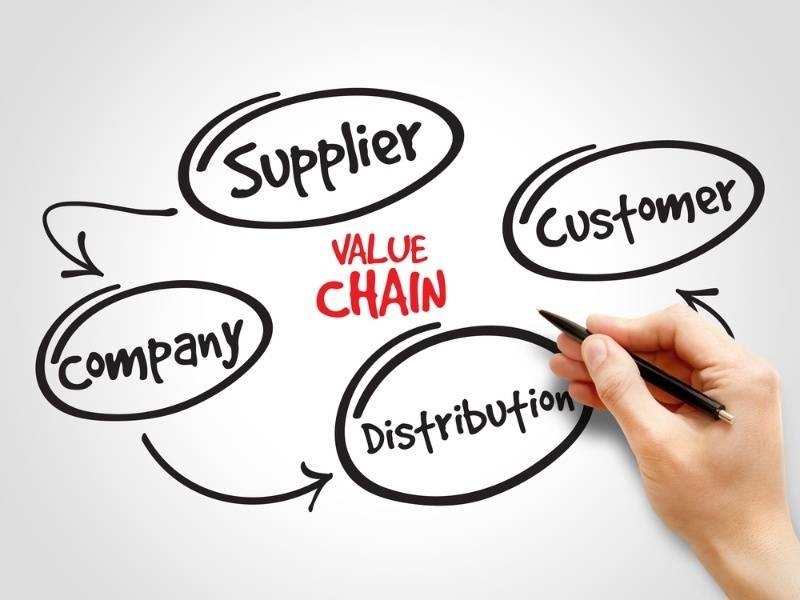
There's more to it than running the odd campaign.
- Define clear brand positioning. People need to know why you're different. Stay consistent everywhere.
- Invest in customer experience. Your ads are only half the story. Product quality, service, website, even returns and support-all of it adds up to how customers see you.
- Measure everything. Track how many people know you, how many engage, how many convert and stick around, and how your finances respond.
- Keep improving. The market moves fast. What works now won't always work tomorrow. Consistency and adjustments are the name of the game.
Try This: Brand Positioning: How to Stand Out & Win Over Customers
Most Common Pitfalls to Avoid:
Here they are:
- Chasing only the short-term sale and forgetting the rest of the chain.
- Failing to pay attention to customer feedback.
- Using inconsistent and potentially conflicting messages across channels.
- Watching just sales numbers and not how people see your brand.
- Treating branding as a set-and-forget task.
Avoid these, and the whole process runs smoother.
Conclusion
The brand value chain gives you a practical roadmap for proving that branding drives business impact. It lets you see marketing not just as a cost but as an investment that shapes customer thinking and, in the end, real financial improvement.
You've seen what the brand value chain is, how each part fits together, and even a simple real-world-style example. The big takeaway? Strong brands aren't built in a day-they're a result of connected actions that reinforce each other over time.
To build a scalable, thriving enterprise, focus on creating superior customer experiences, analyze your results at every turn, and continuously refine how you build your brand. BusinessKnows.com offers ideas and tools to make these connections even stronger-and help you reach your growth goals.
Ready to get started? Align your marketing spend, build trust, track progress, and turn all that effort into lasting advantage.
FAQs
How Does a Brand Value Chain Differ from a Sales Funnel?
A sales funnel looks at getting people from "maybe" to "yes." The brand value chain digs deeper. It tracks how your marketing shapes customer opinions, changes market performance, and delivers actual financial value. It's about the long game.
Can Small Businesses Use the Brand Value Chain?
Absolutely. Measuring simple actions - how many people land on your page, leave reviews, or keep returning - reveals where your branding is succeeding.
What Metrics Should Be Tracked in a Brand Value Chain?
Your brand's awareness, customer satisfaction and engagement, conversions, customer retention, customer lifetime value, market share, and revenue growth are all key areas to monitor. Measure customer behavior, but also consider your financial performance.
Is the Brand Value Chain Useful for Digital Brands?
Absolutely. For digital brands, live data are abundant on customer interactions-social mentions and engagements, user traffic and retention, and online purchasing activities. The brand value chain will reveal just how well your actions correlate to impact the bottom line.
How Often Should a Brand Value Chain Be Reviewed?
A quarterly check-in is a beneficial practice, with a yearly comprehensive review. Continuous analysis will help you identify the impact of your initiatives and correct course more readily before small issues escalate into major problems.
This content was created by AI