Guerrilla Marketing Ideas to Generate Lasting Public Buzz


Key Takeaways
- Guerrilla marketing gets your attention, not by spending a ton of money.
- The best campaigns are built from creative marketing coupled with action from the audience.
- Participation, not visibility, is the objective of smart marketing.
- The most effective viral marketing is when people want to share it.
- A memorable experience, not a one-off promo, equals lasting brand awareness.
Ideas are now competing with each other in marketing. All platforms are packed, all feeds are the same, and all brands are willing to be seen. However, that does not always require increased revenue. But sometimes, the polar opposite is true. An intelligent placement at an appropriate site can beat a costly campaign, as people remember experiences over ads!
Hence, guerrilla campaigns still have relevance today. They break in on routines without having to be pushed. They result in visitors stopping to look, notice, and perhaps take a photo with them. Then they share it. Here in this blog, you'll pick up some practical guerrilla marketing concepts, genuine guerrilla marketing approaches, comparisons, plus methods for building a long-term reputation in the eyes of the public without spending a fortune on advertising.
Guerrilla Marketing Creates Bigger Impact With Smaller Budgets
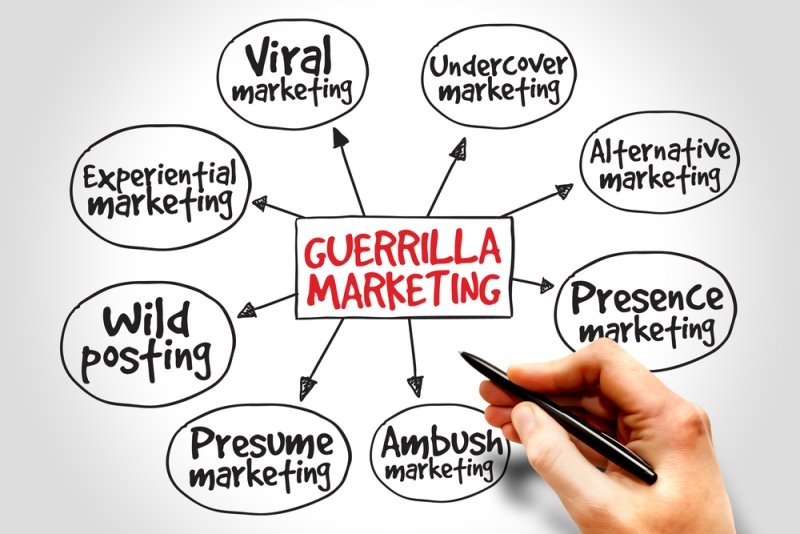
Guerrilla marketing works because it catches people off guard. Instead of competing inside crowded digital feeds, it appears where audiences least expect it.
That surprise creates attention naturally. Many businesses choose Guerrilla marketing because memorable experiences often travel further than expensive advertisements.
Unlike traditional advertising, Guerrilla marketing depends on timing, creativity, audience psychology, plus location. A campaign doesn't always need thousands of impressions.
Guerrilla Marketing Examples Show Why Surprise Wins
The strongest Guerrilla marketing examples rarely begin with a huge budget. They begin with a simple question: what would make someone stop walking?
A staircase transformed into piano keys. A bus stop redesigned as a product experience. Sidewalk artwork that interacts with pedestrians. These Guerrilla marketing examples succeed because people become participants instead of passive viewers.
That participation naturally fuels viral marketing, strengthens brand awareness, and gives creative marketing a more authentic feel.
Creative Marketing Turns Everyday Spaces Into Media
Traditional advertising buys attention. Creative marketing earns it. Public parks, elevators, sidewalks, coffee cups, parking lots-even ordinary places become campaign spaces when ideas are executed well.
The best creative marketing doesn't interrupt life aggressively. It blends into the environment first, then surprises people a second later. That small moment creates lasting recall, which is exactly what effective Guerrilla marketing aims to achieve.
Smart Marketing Strategies Focus On Experience Before Exposure
Many businesses chase impressions first. That's backward. Strong marketing strategies begin by asking what people will remember after the campaign ends. If the answer is "nothing," more spending won't help.
Effective Guerrilla marketing creates an experience worth discussing before it ever becomes content online.
Marketing Strategies Should Encourage Participation
People remember what they do more than what they see. Good marketing strategies invite interaction. Maybe visitors solve a puzzle. Maybe they scan a QR code hidden inside a mural.
It happens that they receive a minor reward when they complete an assignment. By participating in a project, people get emotionally involved, and later, brand promotion is much easier because of that.
Viral Marketing Grows From Genuine Reactions
Brands cannot force viral marketing. They can only create moments worth sharing. That difference matters. Successful campaigns occur because people share photos, speak to their family and friends, shoot videos, or discuss the events in public.
Any effective viral marketing strategy is usually launched from offline promotion, and then there comes the online part, which majorly relies on authentic reactions rather than any paid advertising.
Comparing Traditional Campaigns With Guerrilla Marketing
Choosing between traditional advertising and Guerrilla marketing depends on campaign goals. Both have value. Nevertheless, there are still variations in different spheres of life.
| Factor | Traditional Advertising | Guerrilla Marketing |
|---|---|---|
| Budget | Usually higher | Often lower |
| Audience Attention | Competes with many ads | Gains attention through surprise |
| Engagement | Mostly passive | Highly interactive |
| Shareability | Moderate | Strong potential for viral marketing |
| Brand Recall | Depends on frequency | Depends on memorable experience |
| Brand Awareness | Built over repeated exposure | Built through unique public experiences |
Notice the pattern. Traditional campaigns buy reach. Guerrilla marketing earns conversation. Neither type of marketing can substitute for the other, but their combination may become a winning strategy.
Don't Miss: What are the 10 Best Customer Retention Strategies in 2026?
Brand Awareness Grows When People Remember The Experience
Many campaigns create attention for a day. Fewer create memories. That difference separates temporary exposure from lasting brand awareness. Strong Guerrilla marketing leaves people with a story instead of just a logo.
Creative Marketing Makes Brands Feel Human
The best creative marketing feels personal. It surprises people, sometimes makes them smile, and sometimes sparks curiosity. It does not need to be expensive in production or to involve any celebrities.
The simplest ideas can become the most successful ones. For example, a bookstore can place large bookmarks on park benches, or a travel company may turn the steps of a subway station into stairs in the mountains.
Viral Marketing Works Best When It Feels Natural
Not every campaign should chase millions of views. Strong viral marketing usually begins with one small audience reacting honestly. Their excitement spreads outward. Friends share it. Local media notices.
Online communities pick it up. The reach grows because the idea deserves attention, not because it demands it. Businesses that treat viral marketing as the outcome-not the objective-often build stronger campaigns.
Must Read: 41 Great Small Business Ideas 2026 to Start Right Now
Final Thoughts
Short-term attention is in short supply. It takes longer to hold their attention. This, after all, is the magic of "Guerrilla marketing". It helps to make memories, which are remembered with self-evocation, talked about, captured, and shared without pushing them upon the public.
The best guerrilla marketing comes in all shapes and sizes, and the biggest is not necessarily the strongest. They're the ones that will keep being talked about months after that thought was fresh, unexpected, and sincere. Follow a simple recipe: one idea, research the target audience, and then deliver a great performance.
Frequently Asked Questions
Are small businesses good candidates for guerrilla marketing?
Yes. The best part is that Guerrilla marketing works best with small businesses that don't usually have the big money resources to spend on advertising. If it's a good idea, it will gain traction even in a simple local outreach effort.
What is the riskiest thing about guerrilla marketing?
If planning, messaging, or disregarding local regulations, then negative publicity can ensue. Each campaign needs to be assessed prior to launch for safety, permissions, and brand fit, as well as public perception.
How much time can guerrilla marketing campaigns take?
There are lots of physical campaign events that last just a few hours or days, but the discussions they promote can last weeks. When backed by viral marketing and social sharing, the power can also last a lot longer.
Is guerrilla marketing compatible with digital marketing?
Absolutely. Best campaigns are offline + online. Content generated through public interactions is a true reflection of the moment, and digital channels provide greater awareness-building for the brand while also continuing to drive ongoing audience involvement.
This content was created by AI